 ZH
ZH  IT
IT  EN
EN 


Understanding the Causes of Dolore Sotto la Pianta del Piede
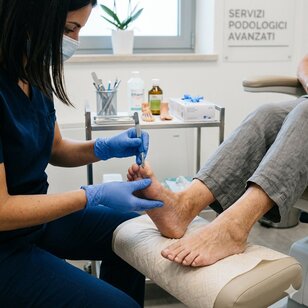
As a podiatrist in Bologna, I see hundreds of patients every year who describe their pain differently: some feel a burning sensation, others a sharp "needle-like" jab in the morning, and some a dull ache that worsens as the day progresses. The truth is that "pain under the sole" is a symptom, not a diagnosis. To treat it effectively today, we must look beyond the surface and identify the specific tissue that is under stress.
Whether you are navigating the cobblestones of Piazza Maggiore or trekking up the hills toward San Luca, your feet absorb several times your body weight with every step. When the structural integrity of the foot is compromised, various conditions can manifest.
Is it Plantar Fasciitis or something else?
The most frequent culprit for pain in the heel and arch is plantar fasciitisInflammation or irritation of the thick band of tissue that runs across the bottom of your foot and connects your heel bone to your toes.. Patients often report that the first few steps in the morning are the most agonizing. This happens because the plantar fasciaThe strong, fibrous tissue that supports the arch of the foot and acts as a shock absorber. tightens overnight; when you stand up, you are essentially stretching a micro-torn tissue that hasn't had time to heal properly.
However, if the pain is located further forward, near the ball of the foot, we might be looking at metatarsalgiaA condition where the ball of your foot becomes inflamed and painful, often due to excessive pressure on the metatarsal heads.. This is particularly common in those who wear restrictive footwear or have a specific foot shape that puts excessive pressure on the metatarsal headsThe ends of the long bones in the forefoot that connect to the toe bones..
Why does walking in Bologna's city center make the pain worse?
Bologna is a city meant for walking, but its unique architecture presents challenges for those with foot pathologies. The uneven surfaces of the historic center and the hard pavement under the endless porticos provide very little shock absorption. If your foot has a tendency toward overpronationA movement where the foot rolls inward excessively, causing the arch to flatten and putting stress on the soft tissues., these hard surfaces accelerate the fatigue of your muscles and tendons.
In my podiatry clinic in Bologna, I often explain that walking on flat, hard surfaces is "unnatural" for the human foot, which evolved to walk on varied, softer terrain like grass or sand. When we force the foot to adapt to the concrete of the city, the intrinsic musclesSmall muscles located entirely within the foot that help stabilize the toes and support the arch. work overtime, leading to chronic inflammation and that dreaded pain under the sole.
Could it be a pinched nerve like Morton's Neuroma?
If you feel a sensation like there is a pebble in your shoe, or if you experience numbness and tingling that radiates into your third and fourth toes, you might be dealing with Morton's NeuromaA thickening of the tissue around one of the nerves leading to the toes, causing sharp, burning pain or numbness.. This is not a tumor, but rather a benign thickening of the nerve sheath caused by compression.
Many patients mistake this for a simple callus or hyperkeratosisThe clinical term for a callus or corn, which is a thickening of the outer layer of the skin.. While a callus is a skin-level defense mechanism against friction, a neuroma is a deeper neurological issue. Using generic cushioned pads might provide temporary relief, but it won't address the structural compression of the nerve.
What are the modern diagnostic steps today?
Medicine has advanced significantly, and today we no longer rely on guesswork. When you visit a specialist, the diagnostic process is comprehensive. We begin with a static and dynamic baropodometric analysisA computerised test that measures the pressure distribution under the feet while standing and walking.. This technology allows us to see exactly where your weight is distributed in real-time.
By visualizing the high-pressure zones, we can determine if your pain is caused by a structural deformity, a gait abnormality, or simply inappropriate footwear. Today, we also utilize high-resolution ultrasoundAn imaging method that uses sound waves to produce images of structures within the body, used here to check tendons and ligaments. to assess the thickness of the plantar fascia and check for any signs of bursitis or tearing without invasive procedures.
Can custom orthotics really solve the problem?
One of the biggest misconceptions is that all shoe inserts are the same. Over-the-counter "gels" often provide a false sense of security; they feel soft, but they don't correct the underlying mechanical failure. Professional custom orthoticsPrescription medical devices made from a 3D scan of your feet to correct specific biomechanical imbalances. are designed to redistribute pressure and realign the joints of the foot.
For a patient living in Bologna, these orthotics are tailored to fit into everyday shoes, allowing you to enjoy your walks through the city without the constant fear of pain. They act as a corrective bridge between your unique foot shape and the unforgiving urban terrain.
Effective treatments for lasting relief
Beyond orthotics, modern podiatry offers several pathways to recovery. Shockwave therapyA non-invasive treatment that uses acoustic waves to stimulate healing in injured soft tissues. has become a gold standard for chronic plantar fasciitis, as it stimulates blood flow and triggers the body's natural healing response in areas with poor circulation.
Additionally, specialized stretching programs and manual therapy can release tension in the posterior chainThe group of muscles on the back of the body, including the calves, hamstrings, and glutes.. Often, the pain under your foot is actually being caused by tightness in your calf muscles, which pulls on the heel bone and increases tension on the sole.
Don't let foot pain limit your lifestyle
Walking is one of the greatest pleasures of life, especially in a city as beautiful as ours. You shouldn't have to decline an invitation to dinner in the hills or a stroll through the markets because of foot discomfort. Most conditions causing pain under the sole are highly treatable when caught early.
If you are experiencing persistent discomfort, I invite you to take the first step toward recovery. A professional evaluation can provide the clarity and treatment plan you need to walk pain-free again. Contact our podiatry clinic in Bologna today to book your comprehensive foot check-up.