 ZH
ZH  IT
IT  EN
EN 


How to Treat a Painful Callus Under the Ball of Your Foot Effectively
A callus, or hyperkeratosisThe thickening of the outer layer of the skin, which is the body's natural defense mechanism against repetitive friction or pressure., is essentially your body trying to protect itself. When the skin under the ball of your foot—the area known as the metatarsalThe group of five long bones in the middle of the foot that connect the ankle to the toes. head—is subjected to abnormal friction or weight, it builds up layers of dead skin cells. While this is protective at first, the buildup eventually becomes so dense that it acts like a foreign object inside your shoe, pressing against sensitive nerves.
In our podiatry clinic in Bologna, we approach this condition not just by removing the hard skin, but by investigating why it formed in the first place. Whether you are navigating the cobblestones of Piazza Maggiore or climbing the hills of San Luca, your feet must distribute your weight evenly. If they don't, a painful callus is the inevitable result.
What exactly causes a callus to become painful under the ball of the foot?
The pain associated with a callus in this specific area is often a symptom of metatarsalgiaA general term for pain and inflammation in the ball of the foot, often caused by high-impact activities or ill-fitting shoes.. When the metatarsal bones are misaligned or if you have a high arch, the "ball" of the foot takes the brunt of your body weight. Over time, this localized pressure causes the skin to harden. The pain occurs because the callus itself becomes a focal point of pressure, pushing back into the soft tissue and nerves with every step.
In the humid climate of 2026 Bologna, skin elasticity can also play a role. Dry skin is less able to handle the mechanical stress of walking, making the callus more prone to developing deep, painful cracks or becoming extremely rigid.
Can I treat a painful callus at home safely?
Many patients ask if they can manage the condition themselves. While maintenance is possible, caution is vital. You can use a high-quality urea-based cream to soften the stratum corneumThe outermost layer of the epidermis, consisting of dead cells that provide a barrier to the external environment. and gently use a pumice stone after a bath. However, I strongly advise against "bathroom surgery."
Using blades or aggressive corn-removers (which often contain salicylic acid) can lead to chemical burns or infections, especially for those with circulation issues. If the callus has a dark center or is causing sharp, lancinating pain, it requires professional intervention by a podiatrist in Bologna to ensure the underlying tissue is not damaged.
When should I see a podiatrist in Bologna for professional treatment?
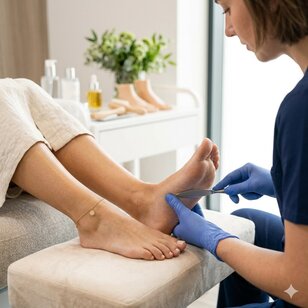
You should seek professional help if the pain limits your daily activities, if the callus returns quickly after home filing, or if you notice any redness or discharge. A professional treatment, known as debridementThe medical procedure of removing dead or thickened skin using specialized, sterile instruments to provide immediate pain relief., is painless and provides instant relief. Unlike home methods, a podiatrist uses sterile instruments to precisely remove only the dead tissue without harming the healthy skin underneath.
During a visit to our clinic, we also perform a biomechanical assessmentAn evaluation of how the bones, muscles, and joints of the feet and legs move and interact during walking.. This allows us to see if your callus is caused by the way your foot strikes the ground, which is often the case for those who spend a lot of time walking on the hard, historic surfaces of the city center.
What professional treatments are available for long-term relief?
Once the immediate pain is addressed through debridement, the focus shifts to prevention. We look at your footwear and your gait cycleThe entire sequence of movements made by one limb during a single step while walking.. If the callus is caused by a structural imbalance, simply removing the skin will only provide temporary relief; it will grow back within weeks.
Advanced treatments today include specialized padding and offloading techniques that redistribute pressure away from the painful area. We also provide education on skin health, recommending specific emollients that penetrate the thick skin of the plantar surface more effectively than standard lotions.
How can custom orthotics prevent the callus from returning?
The most effective long-term solution for a recurring callus under the ball of the foot is the use of custom orthoticsPrescription medical devices worn inside shoes to correct foot alignment and redistribute weight more evenly.. These are not generic insoles found in a pharmacy. They are crafted based on a digital scan of your feet to correct your specific biomechanical anomalies.
By supporting the arches and cushioning the metatarsal heads, orthotics ensure that no single point of the foot ball bears excessive weight. This stops the "defense mechanism" of the skin from being triggered, preventing the callus from reforming. For residents of Bologna, who often walk several kilometers a day under our beautiful porticos, this is the gold standard for maintaining mobility and preventing chronic pain.
Taking the next step toward pain-free walking
Living with a painful callus can diminish your quality of life, making even a short stroll to Piazza Santo Stefano feel like a chore. However, with the right podiatric care, you can regain your comfort and protect your long-term postural health. Don't wait for the pain to become unbearable or for the callus to cause a secondary infection.
If you are struggling with foot pain, I invite you to book a comprehensive check-up at our podiatry clinic in Bologna. Together, we can identify the root cause of your discomfort and implement a treatment plan that keeps you walking comfortably for years to come.